Supporting youth opportunities with funding and capacity building
Learn how funding and capacity building strengthen youth opportunities and development strategies by empowering community organizations to deliver consistent opportunities for young people.

Developing an effective youth strategy starts from a simple truth we see every day: Young people do better when they have educational, vocational, recreational, and other growth opportunities that are consistent, coordinated, and close to home. A plan can set the direction, but it becomes real only when the organizations closest to young people can deliver programming reliably and keep showing up.
It also helps to be precise about language. Youth development strategies often focus on a specific outcome or service focused on providing youth opportunities, such as graduation, job training, mental health support, housing stability, or early childhood programming. A youth strategy is the coordination layer that helps a city align across many of those goals at once, with shared priorities and measures. Coordination becomes harder when organizations are under-resourced yet still expected to deliver results, track outcomes, hire and retain staff, and collaborate across systems.
Combining long-term funding for youth opportunities with capacity building
That’s why the Baltimore Children & Youth Fund (BCYF) pairs sustained, multiyear grant support with structured professional development and peer connection for such organizations. We think of it as “funding and fellowship”: Money stabilizes the work of providing youth opportunities, while relationships and shared learning strengthen the people and organizations doing it.
BCYF has built the development of grassroots organizations into its Youth Master Plan—Baltimore’s first-ever, community-driven roadmap designed with and for young people. In each of the plan’s three stages from late 2025 to spring 2027, we offer more than 300 hours of learning lab programming—workshops and trainings in leadership, facilitation, storytelling, equity, and organizational sustainability—with over 1,500 intergenerational seats for youth, families, and community leaders. The partnership between BCYF and Beadly Speaking Jewelry shows what this looks like in practice.
Implementation starts with capacity
Funding matters, but capacity gaps can slow execution even when dollars are available. Leaders can be stretched thin, systems can be underbuilt, and evaluation, operations, and partnership building can feel like a second job on top of delivering services.
Multiyear support helps organizations plan, staff, and maintain program continuity. The learning and peer connection elements strengthen the capabilities that make funding more effective over time. For youth strategies, this dual approach matters because progress depends not only on dollars being available but also on these organizations being operationally equipped and available to our city’s young people for years to come.
Learning labs help small organizations build capacity
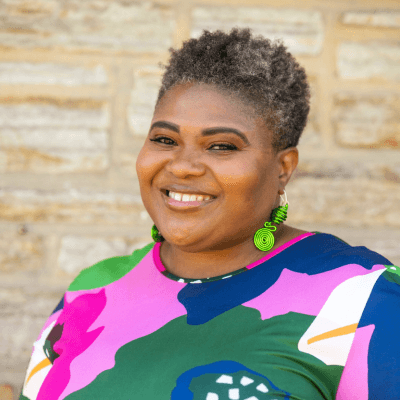
One of BCYF’s grantees, Dyon Davidson, moved to Baltimore from Jamaica at age 12; the handcrafted arts she learned from her family helped her stay grounded through difficult moments. Over time, she saw how creative work could support wellness and confidence in young people in Baltimore, and she started a program to teach kids jewelry making.
The early impact of what began as a volunteer effort was clear, but it faced the same challenge as many small programs: A strong mission is not the same thing as an organization built to last. Sustainability requires infrastructure, evaluation, planning, governance, and a support system that helps leaders grow without burning out.
BCYF’s learning labs are designed to make that a reality. Instead of treating organizational development as an optional add-on, the learning experience focuses on practical areas that many small organizations need while they’re still delivering services. For Beadly Speaking, that meant strengthening evaluation and data collection, building out an infrastructure, and developing a clearer approach to sustainability and growth.
Just as importantly, the learning environment creates a path out of isolation for leaders on the front lines. Learning with peers makes it easier to compare notes, share solutions, and affirm that building systems is part of the job.
Peer connection is capacity building
Peer connection can sound like a secondary benefit, but it functions as capacity building in practice. When leaders have consistent opportunities to learn from one another and build relationships, it speeds up problem-solving and makes collaboration easier. That matters in any citywide strategy because coordination does not happen through planning documents alone; it happens through trust built over time.
In Beadly Speaking’s case, peer connections opened doors to collaborations that strengthened programming without requiring Dyon to carry every component alone. Through relationships built in these spaces, she connected with partners who contributed entrepreneurship lessons and wellness-focused components.
These relationships also create stronger infrastructure. The guidance leaders receive from peers who understand the work and are invested in seeing it succeed helps them to make better decisions for their organizations and the youth participating in their programs.
Baltimore’s Youth Master Plan is a citywide framework, but its success depends on community-level execution, and execution depends on capacity. It reflects one approach that strengthens the network of organizations delivering on the plan by pairing long-term funding with structured learning and peer connection.
Looking ahead, the key question is how communities measure and sustain these capacity-building supports as strategies evolve and new needs emerge. When we center learning and connection as a core part of the plan, the network is better positioned to adapt and implement the strategy smoothly.
Photo credit: The Real Wings Inc.