Stop mistaking Black girls’ resilience for a lack of need
Many funders mistake Black girls’ resilience for self-sufficiency. One nonprofit CEO explains how philanthropy can invest more in Black girls by providing unrestricted funding for long-term impact.

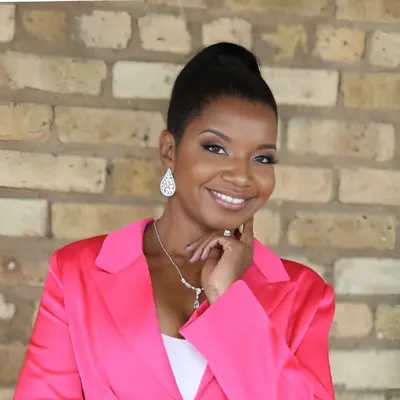
I had been mentoring Black girls in Chicago for several years when I could no longer ignore a recurring pattern. The girls I worked with were creative, resilient, and deeply aware of what was happening in their families, schools, and communities. Yet many did not see themselves as leaders. I founded Ladies of Virtue to help change that.
Through mentoring, leadership development, mental health support, career preparation, and civic engagement, we help Black girls recognize what has always been within them: purpose, passion, perseverance, and the ability to lead.
Fifteen years later, I have come to believe that one of the nonprofit sector’s greatest blind spots is a misunderstanding of what strength looks like. Black girls are often celebrated for their resilience, but resilience is not the absence of need. When we mistake strength for self‑sufficiency, we overlook the care, protection, and investment they require to thrive.
This misunderstanding also contributes to the underinvestment in the organizations working every day to support them. We need long-term investment in the form of unrestricted funding.
What funders misunderstand about Black girls—and Black women-led nonprofits
“Your girls are good” is something I hear often, and I understand what people are seeing. Our girls show up. Many earn good grades, participate in programs, and take on leadership roles. But people may not see the girl struggling with anxiety or depression, the girl helping raise younger siblings, or the girl grieving someone she loves who was killed by gun violence.
Research from Georgetown Law calls this “adultification bias,” the tendency among adults to see Black girls as needing less nurturing, protection, comfort, and care than their white peers. But I did not need a study to tell me that.
I’ve seen a similar pattern play out in philanthropy’s treatment of Black women-led nonprofits. Research shows what many of us have experienced firsthand: Organizations led by Black women are often asked to solve some of our communities’ most pressing challenges while receiving a fraction of the resources needed to do so. We’re expected to deliver transformational outcomes, build sustainable organizations, and fill critical gaps all while operating with less funding and more barriers to access.
What restricted funding misses
Nonprofits know that funders rarely support only a program. They are supporting an entire institution doing work that does not always appear in a grant report. At Ladies of Virtue, mentoring sessions are only one part of what we provide. We also offer leadership development, mental health support, college and career preparation, internships, and civic engagement opportunities. We check on girls who miss sessions, help families navigate conflict, and connect young people to critical resources.
These activities require staff, operations, technology, training, and communications. Restricted grants often do not cover these costs, even though they are essential to making outcomes possible. A young woman does not ask for help because an organization delivered the correct number of workshops. She asks because someone has shown up consistently enough to earn her trust.
What real long-term investment could make possible
Over the last 15 years, Ladies of Virtue has served more than 10,000 girls. One hundred percent of our seniors graduate from high school, and 94% continue to college, trade school, or military service. We achieved these outcomes not because we had abundant resources, but because our staff, mentors, and partners showed up consistently, even when funding did not. For years, we operated with short-term, restricted grants that covered individual programs but not the full cost of the relationships, follow-up, and crisis support that make those programs effective.
That model is not sustainable.
Deidra Bibbs’ story makes this clear. Her growth from a young girl in our program to a clinical psychologist did not happen within a 12‑month grant cycle. It required years of encouragement, opportunities, and steady support, the very things restricted funding makes difficult to maintain.
Long-term, unrestricted funding would allow organizations like ours to strengthen the infrastructure that makes outcomes possible: competitive staff compensation, leadership development, technology, evaluation, communications, fundraising, and training.
Unrestricted funding is essential for, and integral to, sustainable program impact.
The difference between commitment and investment
Ladies of Virtue has made a long-term commitment to Black girls and their families, that’s remained steady even when funding has not. Most of the support we have received has been short-term and restricted, which means our outcomes were achieved through consistency, trust, and the willingness of staff and mentors to do far more than any single grant covers.
The question for nonprofits is how we build institutions strong enough to stay with them for the long haul, and the question for funders is how much unrestricted funding they are willing to invest in these organizations. A single grant cannot sustain the years of mentorship, follow up, and crisis support that make this work effective. Nonprofits need long-term, unrestricted funding that matches the depth of their commitment—so they can remain present for young people not just for one program cycle, but for as long as they are needed.
Photo credit: Ladies of Virtue
About the authors