How can funders build trust?
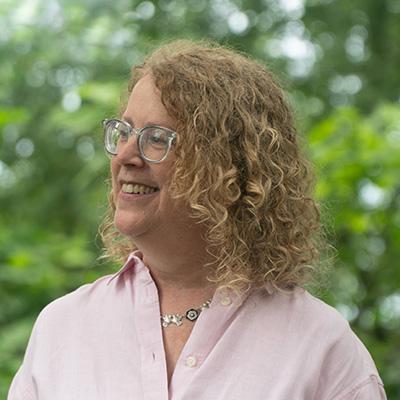
Former CGRE executive director Margaret Hempel shares key learnings about investing in partners to drive long-term change from her time leading the Collaborative for Gender + Reproductive Equity.

As I step down as the inaugural executive director of the Collaborative for Gender + Reproductive Equity (CGRE) and the Gender Equity Action Fund (GEAF), I’ve been reflecting on my seven years of leading a donor collaborative that funds organizations on the front lines of gender, reproductive, and racial equity at a moment when these rights are so threatened.
Over the past few years, the landscape of equity work has shifted dramatically, and we, as funders, have learned many valuable lessons. Two stand out for me: 1) the importance of funding early and staying the course; and 2) building partnerships on a foundation of flexibility and trust.
Staying the course
One of the most effective funding strategies I’ve learned is that we can and must move resources early and stay the course even as we face headwinds. Our partners—many of whom represent communities that are most impacted by inequities—have been historically underfunded. Early and sustained investment gives organizations the runway to plan strategically, build their power for long-term progress, and adapt to changing political and legal climates.
CGRE recognized early that real change often happens at the state level, so we invested in state-based organizations years before Roe v. Wade was overturned. Because of these early investments, our grantees across the country were prepared to face new challenges head-on once the Dobbs decision gave the power to the states to restrict or protect abortion. After the 2024 elections, we were asked the same question over and over: “How will you change your strategy now?” The answer was simple: we wouldn’t. Just as our grantee partners continued the hard work day in and day out of organizing and advocating for gender equity and reproductive rights, we needed to sustain them with our investments. These equity issues unfold over decades, and across multiple generations, so we must fund them with sustained, long-term support.
I’ve also come to appreciate how important it is, when possible, to fund work through both 501(c)(3) and 501(c)(4) structures. Despite the fact that I didn’t have much (c)(4) experience, I quickly recognized how this funding would move the work forward. So, we hired experts to lead us in the right direction. We’ve seen this support enable our partners to advance their programmatic work while engaging in the advocacy and accountability efforts necessary to protect and expand rights.
Backing organizations with flexibility and trust
At CGRE, we strive to be transparent with the groups we support (and those we can’t). In turn, we give groups the autonomy and space to carry out their work and adjust as needed. In our grantmaking, that means providing mostly general operating support and multiyear grants. General operating support allows grantees to adapt as opportunities arise or to shift when strategies fall short and multiyear funding demonstrates our trust and backing of their work beyond immediate outcomes. This requires being open to different paths towards the same shared goals and trusting groups to know when they need to shift strategies. State and local leaders know their communities best and understand what approaches will work. By listening to their perspectives before offering guidance, we’ve been able to achieve more sustainable and constructive outcomes.
Participation in organic, strategic coalitions—spaces where organizations coordinate strategy and align their efforts—is critical. At CGRE, we fund multiple organizations across states working toward common goals to advance gender equity and reproductive rights in their state. We don’t require collaboration, but we’re here to support grantees when they choose to coordinate in ways that feel authentic to them. For example, CGRE funds several state and regional law centers. It was at their request that we began convening them for cross-state learning to strategize legal theories and impact litigation. We don’t set the agenda; they do. We recognize that the most durable change comes from many groups working together over time, so we fund that way.
Finally, it’s important for us to remember that wins must be protected, and losses are inevitable. Neither are reasons to abandon funding of a group that has smart, long-term plans. In fact, the long-term changes we aim for in this work require consistent investment and the ability of groups to plan and pivot.
What I am taking forward with me
Philanthropy often encourages collaboration among on-the-ground organizations. What I have learned from my time with CGRE is that donors must do the same. We do not have to, nor should we, do this work alone. Together, whether through collaborative funds like CGRE and GEAF or aligned giving, we can pool our resources, streamline funding processes for grantee partners, and multiply our impact in a time when there is so much need and so much at stake.
I am excited that the next leader of CGRE will continue to explore how we—and philanthropy as a whole—can continue to focus on supporting organizations in ways that enable them to pursue ambitious, lasting solutions.
Photo credit: CCR Studios
About the authors