

What funders look for: Strategies for sustainable community impact
Find out what funders look for when evaluating nonprofit partners to support—and how your organization can attract their funding to sustain community impact.

The nonprofit sector is facing a moment of recalibration. Even as funders respond to the urgent need for unrestricted support, they’re also asking rigorous questions about results, sustainability, and what real long-term impact entails. Many organizations are adapting to smaller budgets and shifting donor expectations.
As a business leader and philanthropist, I’ve seen how an organization’s ability to endure under external pressures depends on clarity of vision, strong management, and disciplined strategy. My work with the TAWANI Foundation and the Pritzker Military Foundation is focused on helping grantees build the resilience and infrastructure needed to sustain their work.
Here’s what we as funders look for when evaluating nonprofit initiatives—practices that help nonprofits deepen their mission, demonstrate measurable results, and attract sustained support.
Lead with a clear vision
Funders want to understand not just what your nonprofit does, but why it matters—and how it will make a lasting difference. What is the ultimate purpose of the program? Where will this work stand five or 10 years from now? What change should we see in the community or institution? A strong, clear vision inspires mission alignment, trust, and, ultimately, investment.
We look for partners whose missions address identifiable societal needs—whether expanding access to education, preserving our shared history, or advancing equality. For example, our collaboration with Loyola University Chicago was an investment in the university’s long-term resilience, supporting both its students today and its capacity to serve generations to come.
Demonstrate measurable, scalable progress
An equally important element funders look for is how organizations track and communicate their progress: measuring what directly guides decision making. For example, our partners Howard Brown Health and Equality Illinois track and report not just tactical outputs (services delivered, people reached), but broader outcomes, from expanding access to care to advancing equality through community-based advocacy. Their ability to demonstrate measurable, scalable progress builds confidence among funders and communities. Here’s how:
- Distinguish between outputs (what you do) and outcomes (what changes as a result).
- Track progress against your stated vision and goals.
- Use data to inform program adjustments and strategic decisions.
- Communicate impact in ways that resonate with both funders and communities you serve.
Listen, collaborate, and build on shared commitment
At the same time, funders look for opportunities for true partnership:
Meaningful philanthropy starts with listening. Real progress happens when funders and nonprofits work side by side—discussing challenges, testing ideas, and adapting together. Shared problem solving produces stronger outcomes.
Effective collaboration requires humility and the willingness to listen as much as we lead. In my experience, the best partnerships grow when funders understand the realities nonprofits face and adjust their support accordingly. That may mean providing flexible funding, aligning timelines with real-world conditions, or simply creating space for honest dialogue. When both sides treat one another as equal partners, philanthropy becomes more responsive and the impact far more enduring.
Funder volunteerism can also serve as a powerful bridge between funders and nonprofits. When funders engage directly—serving with community members—they come away with a deeper appreciation for the mission, as I did when I assembled medical kits for Operation White Stork and traveled to Ukraine to distribute them alongside other volunteers. These experiences strengthen funders’ long-term commitment and reinforce shared responsibility for sustainable impact.
Further, sustained impact depends on more than the funder-nonprofit relationship alone. When funders, nonprofit leaders, and community members all contribute, they help organizations build the strength to endure. I believe resilience grows when support is distributed, when many people take ownership of the mission, and when success is defined by collective progress rather than individual contributions. For nonprofits, this means cultivating a broad network of supporters—funders and donors, volunteers, board members, partner organizations—so when one source of support shifts, the mission can still move forward.
What nonprofits can do
To build collaborative partnerships with funders while also engaging the community and expanding your base of support:
- Be transparent about successes and challenges and share what you’re learning—including what hasn’t worked.
- Communicate regularly, not just when reporting is due.
- Ask funders for the type of support that would be most valuable (flexible funding, connections, capacity-building resources).
- View funders as thought partners who bring expertise and networks, not just capital.
As funders, we look for organizations that lead with vision, measure their results, and invite collaboration that strengthens the entire nonprofit ecosystem. I’ve seen what’s possible when strong ideas are matched with steady partners: real lasting change. My goal, in every grant and partnership, is to help build the kind of organizations that will still be serving their communities long after any single gift is spent. Looking ahead, the most durable progress will come from nonprofits and the funder community partnerships that empower them to shape solutions with—and for—the people they serve.
Photo credit: TAWANI Enterprises
About the authors
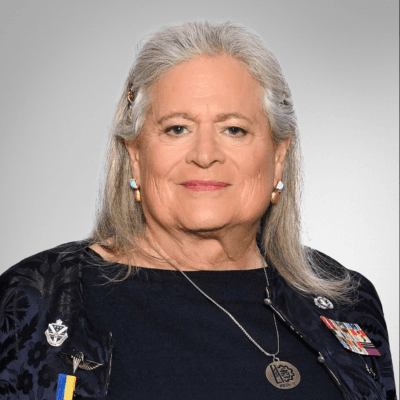
Colonel (IL) Jennifer N. Pritzker
she/her
Founder, TAWANI Foundation and Pritzker Military Foundation
View bio